Imagine investing in a company without understanding its financial health. Risky, isn’t it? A balance sheet is more than a financial statement—it’s a roadmap to a company’s financial position. Whether you’re an investor, a business owner, or a finance professional, analyzing balance sheets isn’t just a skill—it’s essential for making informed decisions and avoiding costly mistakes.
This guide will break down why analyzing balance sheets matters, what to look for, and how to use financial ratios to uncover critical insights.
Why Analyze a Balance Sheet?
1️⃣ For Investors:
Investing without analyzing a balance sheet is like buying a house without inspecting its foundation. The balance sheet reveals whether a company is stable, growing, or over-leveraged, helping you avoid risky investments.
2️⃣ For Business Owners:
Your company’s balance sheet shows where your resources are tied up, how much you owe, and whether your business is sustainable. It’s a vital tool for steering your company toward growth.
3️⃣ For Finance Professionals:
From accountants to consultants, understanding balance sheets is fundamental for assessing liquidity, profitability, and solvency. It’s the foundation for strategic advice and sound decision-making.
What is a Balance Sheet?
A balance sheet offers a snapshot of a company’s financial position at a specific point in time. It consists of three main components:
- Assets: What the company owns (e.g., cash, receivables, fixed assets).
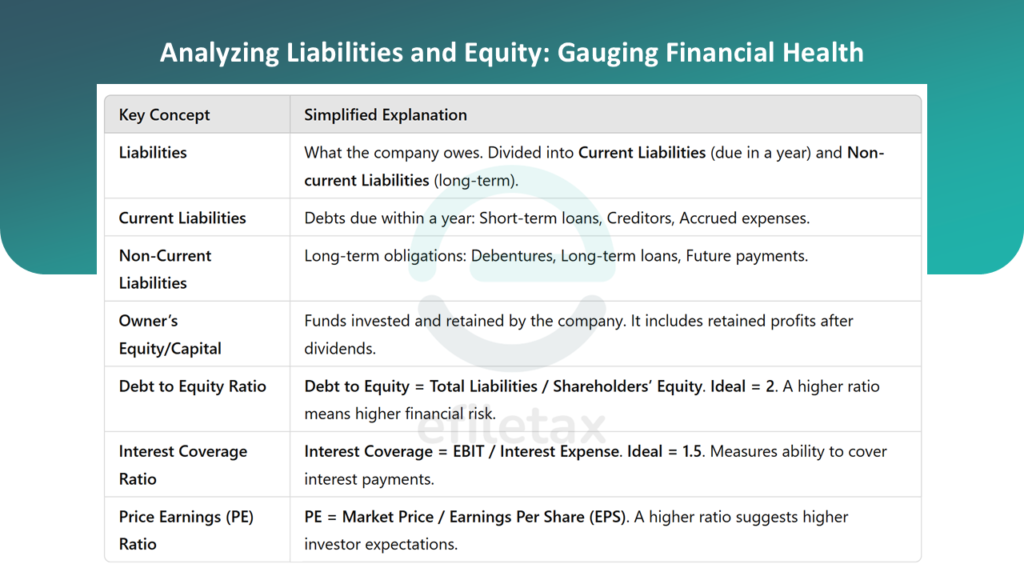
- Liabilities: What the company owes (e.g., loans, creditors).
- Owner’s Equity: The owner’s share after all liabilities are deducted.
Formula:
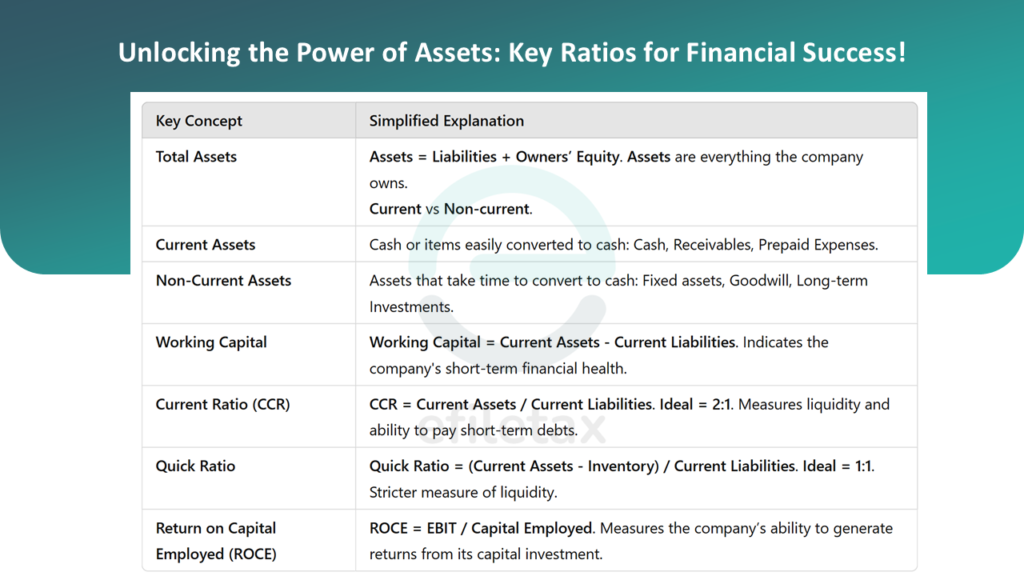
Assets = Liabilities + Owner’s Equity
Key Components of a Balance Sheet
1. Assets
- Current Assets: Easily converted to cash within a year (e.g., cash, accounts receivable, inventory).
- Non-Current Assets: Long-term resources such as property, goodwill, and investments.
2. Liabilities
- Current Liabilities: Short-term obligations like creditors and short-term loans, due within a year.
- Non-Current Liabilities: Long-term commitments such as bonds, long-term loans, and deferred payments.
3. Owner’s Equity
Funds invested by owners plus retained earnings after dividends are distributed.
Financial Ratios for Analyzing Balance Sheets
Financial ratios are tools that provide insights into a company’s liquidity, profitability, and risk. Let’s explore some essential ones:
1. Current Ratio (CCR)
- Formula: Current Assets ÷ Current Liabilities
- Ideal Ratio: 2:1
- Purpose: Measures the company’s ability to pay short-term debts.
2. Quick Ratio
- Formula: (Current Assets – Inventory) ÷ Current Liabilities
- Ideal Ratio: 1:1
- Purpose: A stricter measure of liquidity, excluding inventory from calculations.
3. Debt to Equity Ratio
- Formula: Total Liabilities ÷ Shareholders’ Equity
- Ideal Ratio: 2
- Purpose: Highlights the level of financial risk associated with the company’s reliance on debt.
4. Return on Capital Employed (ROCE)
- Formula: EBIT ÷ Capital Employed
- Purpose: Evaluates how efficiently a company generates profit from its capital.
5. Interest Coverage Ratio
- Formula: EBIT ÷ Interest Expense
- Ideal Ratio: 1.5
- Purpose: Indicates whether the company can comfortably meet its interest obligations.
6. Price Earnings (PE) Ratio
- Formula: Market Price ÷ Earnings Per Share (EPS)
- Purpose: Reflects investor expectations and market valuation of the company.
Common Questions
Q: What’s the difference between Current and Non-Current Assets?
A: Current assets are short-term resources like cash and receivables, while non-current assets include long-term investments like property and goodwill.
Q: Why is the Debt to Equity Ratio important?
A: It highlights how much the company relies on debt versus shareholder funds, signaling financial stability or risk.
Why Balance Sheet Analysis Matters
- Liquidity: Can the company meet short-term obligations? Ratios like the Current Ratio and Quick Ratio provide answers.
- Risk: How leveraged is the company? The Debt to Equity Ratio reveals whether the company is over-reliant on debt.
- Profitability: Is the company generating enough returns on its investments? ROCE provides critical insights.
Failing to analyze these elements can lead to poor investment choices, resource mismanagement, and strategic blunders.
The Bottom Line
A balance sheet isn’t just a collection of numbers—it’s a powerful tool that tells the story of a company’s financial health. Whether you’re an investor, a business owner, or a finance professional, understanding balance sheets can help you make smarter decisions and achieve better outcomes.
Remember: Numbers don’t lie. Learn to decode them, and they’ll guide you toward financial success.