How to Save Income Tax Under Section 80C in 2026
Last Updated: April 2026
As we move into the 2026-27 Assessment Year, Section 80C remains the most popular way for Indian taxpayers to reduce their taxable income. However, with the "New Tax Regime" now being the default, it's more important than ever to know if 80C still works for you.
1. The Golden Rule: Old vs. New Regime
Before you invest a single rupee, remember this: Section 80C deductions are only available if you opt for the Old Tax Regime.
- Old Regime: Higher tax rates, but allows 80C deductions up to ₹1.5 Lakh.
- New Regime: Lower tax rates, but most deductions (including 80C) are removed.
2. Top Section 80C Investment Options for 2026
The total limit for Section 80C remains capped at ₹1.5 Lakh per annum. Here are the best instruments to help you reach that limit:
| Investment Type | Lock-in Period | Risk Level | Ideal For |
|---|---|---|---|
| ELSS Mutual Funds | 3 Years | Market-linked | Wealth creation & young investors |
| PPF (Public Provident Fund) | 15 Years | Low (Govt Backed) | Long-term safety & retirement |
| Life Insurance Premium | Policy Term | Low | Family protection |
| EPF (Employee Provident Fund) | Until Retirement | Low | Salaried individuals |
| Tax-Saving FDs | 5 Years | Low | Conservative investors |
3. Don’t Forget These "Non-Investment" Deductions
You don't always have to "spend" more to save. These existing expenses also qualify under the ₹1.5 Lakh limit:
- Children's Tuition Fees: Paid to any school, college, or university in India (max 2 children).
- Home Loan Principal: The principal repayment portion of your EMI.
- Stamp Duty & Registration: Expenses paid during the purchase of a new house.
4. The "Bonus" Deduction: Section 80CCD(1B)
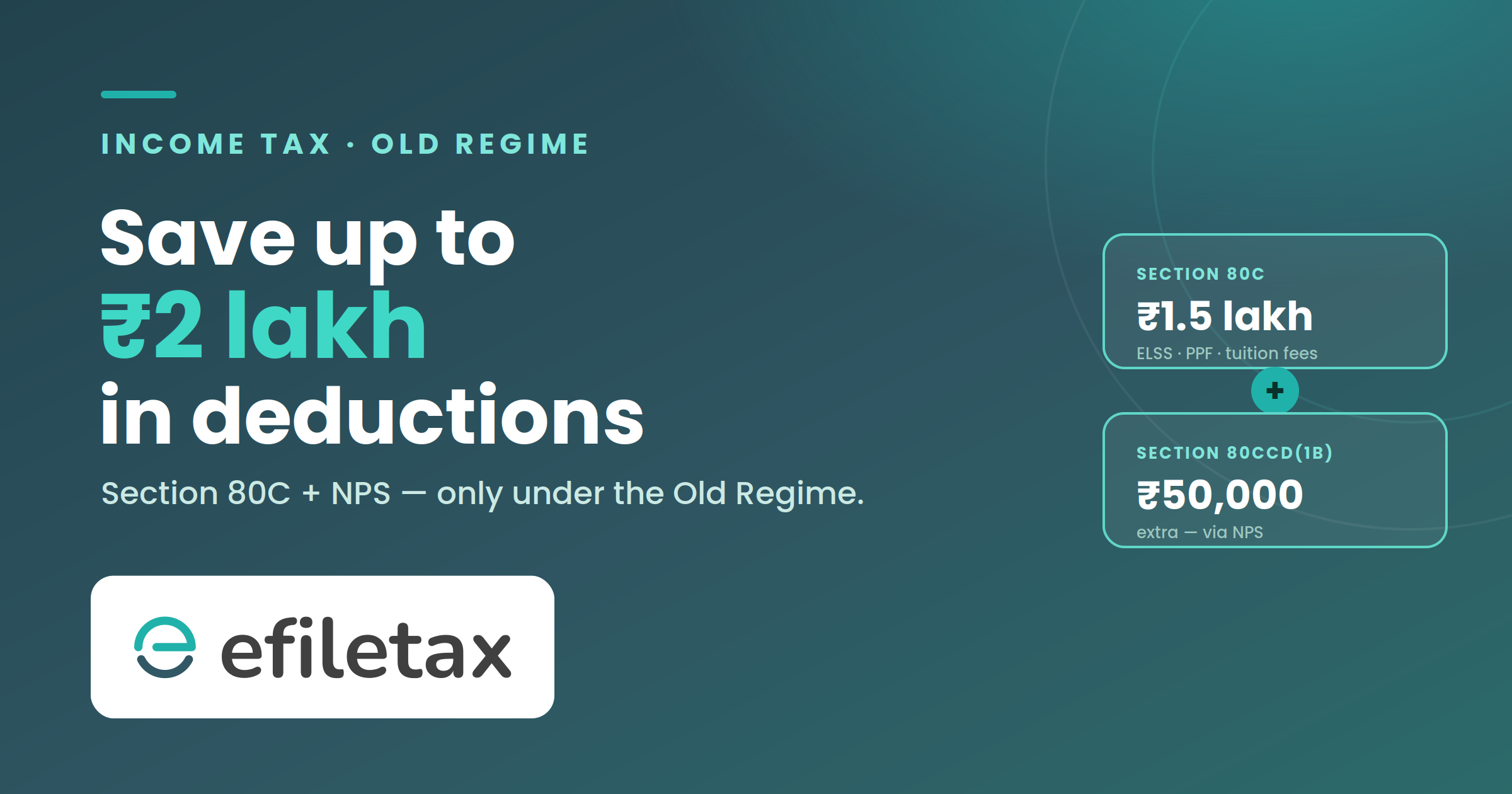
If you have already exhausted your ₹1.5 Lakh limit under 80C, you can claim an additional ₹50,000 deduction by investing in the National Pension System (NPS). This brings your total potential deduction to ₹2 Lakh.
Pro-Tip for 2026: Check your salary slip for EPF contributions and your home loan statement for principal paid. Often, these already cover a huge chunk of your 80C limit, so you might not need to invest the full ₹1.5 Lakh in new schemes!
5. Conclusion
Saving tax in 2026 requires a balance between choosing the right regime and picking the right assets. If you value long-term disciplined savings like PPF or ELSS, the Old Regime with Section 80C might still be your best bet.
Disclaimer: Tax laws can change. Always consult with a certified tax advisor before making large financial decisions.