In a recent update, the Central Board of Indirect Taxes and Customs (CBIC) clarified crucial details regarding GST rates and product classifications. This guidance stems from the recommendations made during the 54th GST Council meeting, held on September 9, 2024, in New Delhi. The clarifications, detailed in Circular No. 235/29/2024-GST, dated October 11, 2024, ensure uniform application of GST laws across India.
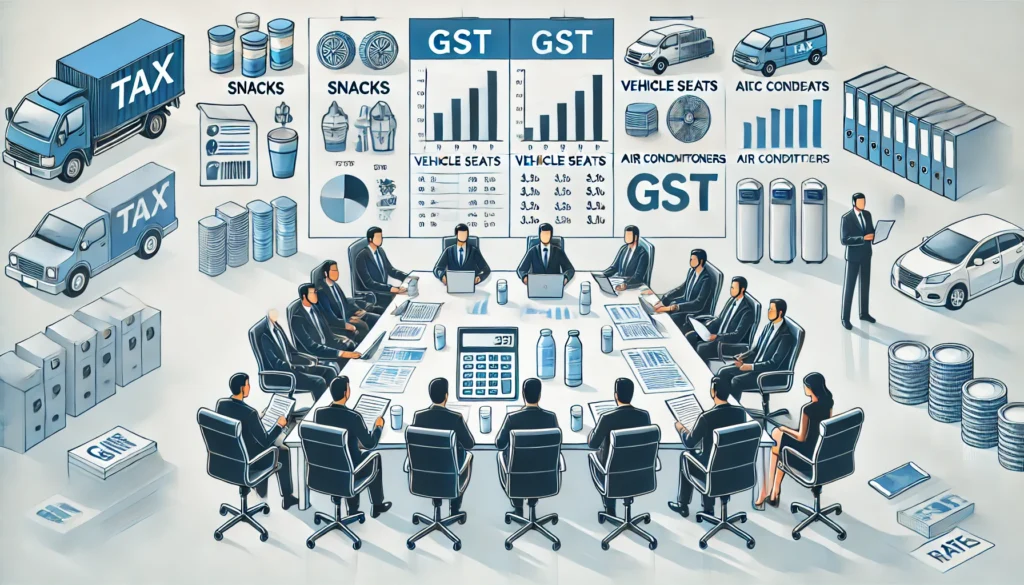
Key Highlights of the Clarifications
1. GST Rate on Extruded and Expanded Savory Products
Businesses have long debated how to classify extruded or expanded savory products under GST. Previously, there was confusion about whether these items should be classified under HS 2106, which typically applies to “namkeens” and similar snack products. To resolve this, CBIC clarified that, from October 10, 2024, savory snacks (except un-fried or un-cooked pellets) will attract a 12% GST rate under HS 1905 90 30. However, for past transactions, the GST rate of 18% will continue to apply.
2. Roof-Mounted Air Conditioning Units for Railways
Another important update involves air conditioning units used in railway coaches. There has been confusion over whether these units should fall under HS 8415, which carries a 28% GST rate, or HS 8607, with a lower 18% rate. CBIC clarified that these units are classified under HS 8415, confirming the 28% GST rate moving forward.
3. Classification and GST Rate on Car and Motorcycle Seats
Clarifying a long-standing issue, CBIC confirmed that car seats fall under HS 9401. They were previously taxed at an 18% rate but, from October 10, 2024, will attract a 28% GST rate. Motorcycle seats, however, remain classified under HS 8714, with a consistent 28% GST rate.
Impact on Businesses
These clarifications aim to resolve disputes around product classifications, making it easier for businesses to comply with the correct GST rates. Manufacturers and sellers should review their product portfolios to ensure accurate tax calculations. Adhering to these updated rates will help avoid penalties and disputes.
Compliance and Case Law
In the past, businesses have faced legal challenges related to incorrect product classifications. The latest updates reinforce the importance of accurate product descriptions. Minor classification errors can significantly impact GST rates, making it crucial for businesses to stay informed about these changes and seek professional advice.
Conclusion
The recent CBIC circular highlights the evolving nature of GST regulations. With new rates in effect, businesses must regularly update their understanding of GST classifications and rates. Industries dealing with snacks, air conditioners, and vehicle seats, in particular, should immediately review their classifications to ensure compliance.