The Budget 2025 has set the stage for a pivotal shift in India’s tax landscape. At the heart of the discussions are two key proposals: the introduction of a new Direct Tax Code (DTC) and potential modifications to the existing tax regime. With a focus on simplification, the government aims to make taxes less cumbersome while addressing public expectations.
The New Direct Tax Code (DTC): A Paradigm Shift
Simplification and Modernization
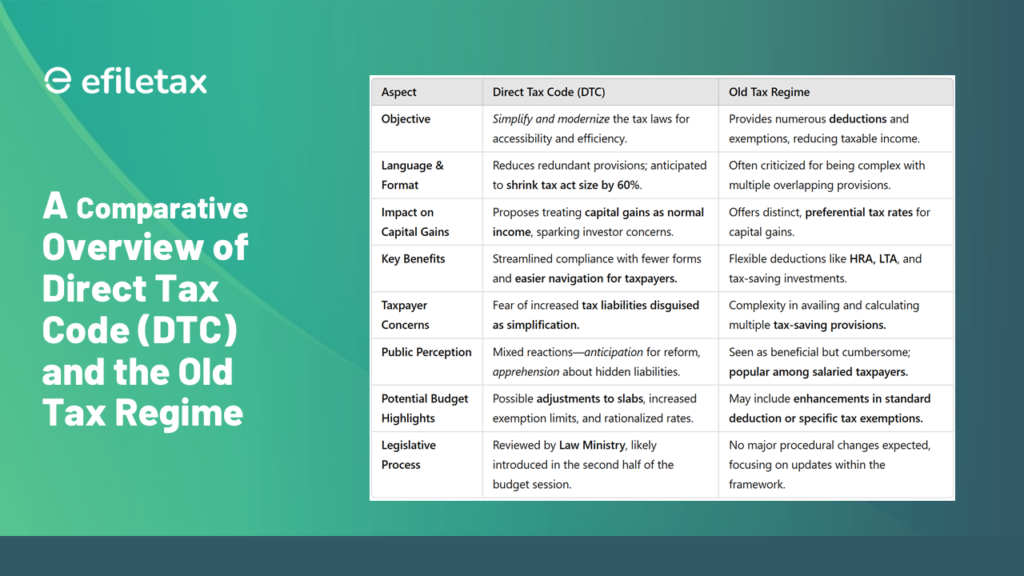
The DTC is envisioned as a streamlined successor to the Income Tax Act of 1961, aiming to simplify provisions, reduce redundancies, and present a more accessible framework for taxpayers. According to reports, the new code may cut the act’s length by nearly 60%, reducing complexities for individuals and businesses alike.
Capital Gains Tax Reforms
A significant point of contention is the proposal to treat capital gains as regular income, which could alter investment patterns. While experts argue this might increase tax liabilities for certain investors, the move is touted as a step towards global alignment.
Public Reactions
Conversations on social media platforms like X highlight mixed sentiments—some laud the efforts to modernize, while others fear the simplification may come at the cost of higher tax burdens.
The Old Tax Regime: What’s at Stake?
Benefits of the Current System
The existing regime offers several deductions and exemptions, such as:
- House Rent Allowance (HRA)
- Leave Travel Allowance (LTA)
- Deductions under Section 80C, including insurance and ELSS investments.
Taxpayers benefiting from these provisions may face challenges if the new DTC eliminates or alters them.
Anticipated Changes
While the old regime has its merits, policymakers are exploring ways to introduce globally competitive tax reforms. Budget 2025 is expected to focus on restructuring tax slabs and enhancing the basic exemption limit to ease compliance.
Key Budget Expectations
Tax Slabs and Standard Deduction
- Standard Deduction: Raised to ₹75,000 in the 2024 Budget for AY 2025-26, with potential for further revisions.
- Tax Slabs: Anticipated updates could lower thresholds for higher tax brackets, providing relief to middle-income earners.
Legislative Timelines
The new direct tax law is likely to be introduced in the second half of the budget session, post-review by the law ministry.
Case Laws and Public Impact
Madhya Pradesh High Court Ruling
A recent case highlighted flaws in GST cancellation notices, underscoring the need for clear communication in tax reforms. Similar lessons from case laws could shape how the DTC addresses compliance issues.
Impact on Individual Taxpayers
Potential changes in exemptions and deductions have raised concerns about increased liabilities for salaried professionals and investors. Simplification must balance compliance ease with tax savings.
Social Media Buzz: Emoji Taxes?
The idea of making taxes more engaging, with innovations like emoji-driven tax interfaces, has captured public imagination. While critics view it as a distraction, supporters believe creative approaches could make compliance less intimidating.
The Budget 2025 represents a crucial juncture in India’s tax evolution, with the Direct Tax Code poised to simplify compliance and enhance transparency. However, balancing simplification with taxpayer benefits remains critical. As India embraces modernization, staying informed is key to navigating these changes effectively.